


Most companies search for top cloud cost optimization strategies after a few months or years of shifting to the cloud environment. Why? Let me explain in Layman’s terms. Imagine you move to a new house and organize it according to its look and feel. After a few months, the same organization is hard to maintain; things are out of place, and the overall setup feels cluttered. The space is no longer very useful, and there’s no space left for more furniture.
Now, compare the same with cloud computing. 2026 businesses are taking advantage of the cloud’s flexibility and scalability. But, without proper cloud cost optimization best practices, the cloud environment can quickly become unorganized with underutilized or unused resources. This can dig a big hole into your IT budget. Most cloud service providers (CSPs) charge customers for the whole cloud computing package, whether they are fully utilizing the benefits or not.
To reduce cloud infrastructure cost, a cloud cost optimization checklist is much needed. It ensures that the cloud environments are more efficient, less complicated, and completely utilized – cutting costs in both the short and long-term!
What is Cloud Cost Optimization?
Optimizing cloud cost is the process of decreasing cloud spending without affecting performance, scalability, and reliability. The process includes monitoring usage patterns, detecting underutilized areas, and using best practices like rightsizing instances, applying spot or reserved instances, and removing idle services.
The end goal of successful cloud cost optimization is to get the best cloud performance at the least cost, i.e., by applying strategies that maintain security, compliance, budget, and operational requirements.
Searching for the optimal cloud environment can be hectic. Especially since it involves multiple, time-consuming steps like comparing cloud providers’ services and subscriptions, choosing among various cloud resources, and identifying the perfect cloud infrastructure for your organization’s operation. All these can be easily mitigated by using the right processes and tools.
As always, planning ahead of time helps to correctly assess the best possible way/s to spend your cloud budget. Cloud cost optimization not only saves money but also reveals useful insights about how to distribute finances to different projects, apps, teams, and customers. It helps in a comprehensive tracking of your company’s budget allocation and whether it is being utilized proactively.
Why do Cloud Costs Increase?
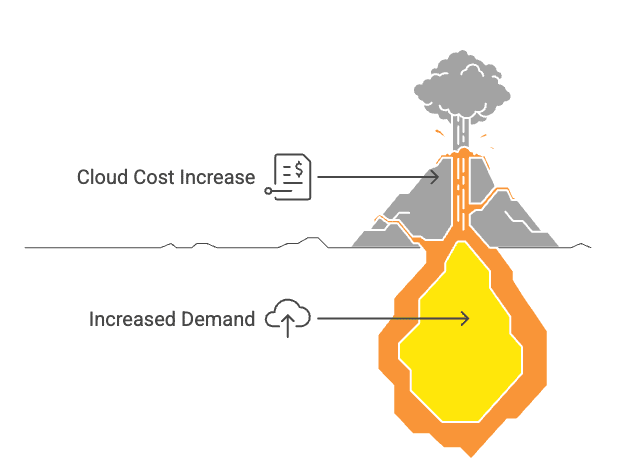
Cloud cost optimization for startups or as a matter any company can feel like a futile exercise without proper planning on how to control cloud expenses. Cloud infrastructure comes with a host of benefits, like unlimited scalable resources and self-service. These services, if not managed well, can quickly escalate cloud costs. Another problem is complicated cloud pricing models.
To make cloud infrastructure more accessible and affordable today, many providers offer cost management tools that provide useful insights, such as:
- Utilization of resources
- Breakdown of costs
- And optimization recommendations.
On their part, companies have also put in place cloud optimization best practices and strategies to harness the benefits of cloud investments. Many organizations also have a dedicated team to monitor the process. The team can include cloud architects, cloud financial analysts, cloud operations managers, and cloud cost engineers.
What’s the Importance of Cloud Cost Optimization?
According to a report by Flexera, 32% of cloud budgets go to waste every year. The data doesn’t stop here; over 33% companies spend around $12 million annually on public cloud services. Now, imagine spending this much money without using cloud resources fully. How tragic is that?
Here are some effective benefits of cloud cost optimization in 2026:
- Increased cost savings by educating teams on cloud best practices and considering ROI on cloud spending.
- Enhancing efficiency by identifying underutilized resources and rightscaling and autoscaling tools.
- Communicating and developing a thorough cloud budget can lead to cost savings.
- Rightly using all cloud resources results in enhanced processing times and user experiences.
- Cloud optimization tools like autoscaling and Infrastructure as Code (IaC) enforce consistent security controls and reduce misconfiguration risks.
- Cloud cost optimization can enhance business continuity by reducing downtime risks and cutting down on the impact of disruptions.
- Allocating cloud resources responsibly can add to sustainability by decreasing energy consumption and reducing carbon footprints.
Related: What is Virtualization? Types of Virtualization in Cloud Computing
Cloud Cost Optimization Checklist: Updated for 2026
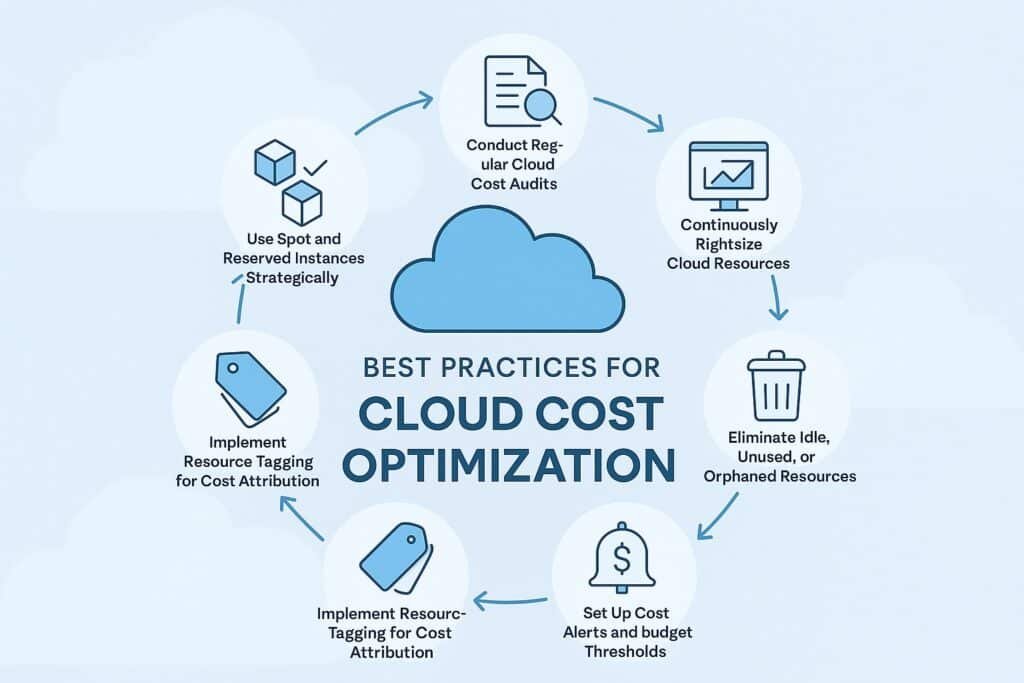
Below, I have stated some of the best practices for cloud cost optimization that also include AWS cost optimization strategies and Azure cost management tips. No matter what cloud service provider you are currently using, these strategies will come in handy under every circumstance.
1. Get Visibility Into Your Cloud Costs
Every strategy starts when you have a complete insight into how much you are paying for each resource. Without this information, you have no idea whether you are overspending or not.
You can also access many cloud cost optimization tools like AWS CloudWatch, Kubecost, Microsoft Cost Management, etc., to monitor aggregated fees in real-time.
2. Detect Unessential Costs
One of the most common causes of high cloud cost is paying for redundant services. Forgotten and unused past resources might not add value to your organization’s workflow anymore, but will add to the overall cloud cost. This can be combatted with regular audits of your cloud infrastructure to detect and remove unneeded resources. You can identify empty databases, instances without any user interactions, and detached storage volumes to remove excess cost accountability.
3. Optimize Resources To Suit Your Workload
A vital method to drain excessive cloud cost is to underutilize resources. Apps that cannot use available CPU and memory capacity won’t benefit from large provisioned cloud resources. But it will add to the bill! Large storage volumes that are more than your data will add to the same issue.
To avoid this, always match your resource capacity to resource utilization. Use auto-scaling to right-size dynamically based on the latest resource utilization and on-demand.
4. Use Multiple Clouds for Services
Using a single cloud service provider for all requirements can add to the costs and create potential redundancies. Compare multiple CSPs to understand their offerings and price models. It might be sensible to go multicloud if you are looking for a new cloud resource, like manage database or storage solution.
For example, if your requirement is hybrid cloud and compliance, the primary cloud service you need to look for is on-premise, private infrastructure. The secondary cloud can be Azure Active Directory and Azure Functions. This will help you to meet security regulations and compliance.
5. Choose the Right Storage Options
Storage options for cloud-native apps can vastly differ. Some of the options include network storage mounts, object storage, and block volume disks. You can select the right one for your environment, as apps generally support multiple types of storage. Selecting the best-suited one can result in significant cost savings.
6. Setup Automated Alerts to Monitor Cost Spikes & Anomalies
You can immediately detect cost anomalies with alerts that trigger in real-time. Many tools are available that track your historical expenditures to flag anything out of the ordinary within your infrastructure. This allows you to take quick action before the end of the billing period.
You can put this in place by allocating and adhering to strict budgets and promoting the same among designated team members.
7. Monitor Cloud Pricing Tables Regularly
Just like most commodities, cloud pricing also changes regularly. To not miss out on savings, it’s worthwhile to review your cloud provider’s price from time to time. You can save money in two ways:
- Either by choosing a less pricey cloud infrastructure from the same provider.
- Or, switching to a competitor provider who might offer a better deal.
You can also use IaC-linked tools to understand the pricing of your current cloud infrastructure across various cloud platforms. An example of one such tool is Infracost.
8. Cut Costs on Redundant Software Licenses
Most organizations include prices of their proprietary software licences or subscriptions (on which their deployments depend) in their cloud cost budget. These deployments can be done manually or through service marketplaces integrated into cloud provider control panels.
A clever way to cut costs on cloud is to reduce the number of licensed software subscriptions. Especially when the market is teeming with open-source (FOSS) or free software alternatives. This saved budget can be reallocated elsewhere for more vital use.
9. Check Cost of Support
Cloud providers often charge you for any additional support. Companies get reassurance after buying a premium support plan with devoted contacts and troubleshooting steps. But it adds unnecessary charges to your monthly subscription.
Most organizations seldom use cloud support; if you are one of them, consider switching to an alternative, cost-effective cloud subscription. You can also negotiate with your CSP to offer a better price for a long-term arrangement for premium support. In case of a catastrophic cloud failure, from the provider’s side, even the most apt frontline staff might not be able to help you then. Thus, it is smart to opt for a competitive SLA rather than direct access to support.
10. Predict Future Cloud Costs
To fully utilize cloud resources and have a budget in place, it is advisable to predict future cloud requirements and associated costs.
To precisely predict future cloud costs, you can consider these vital approaches:
- Analyze historical data.
- Segregate predictions based on workload types.
- Use predictive analytics tools like AWS Cost Explorer, Azure Cost Management, or even third-party ones like CloudHealth.
- Generate predictions depending on several growth scenarios, like rapid-expansion, steady-growth, etc.
- Continuously detect cost anomalies and spikes to dynamically refine future cloud budgeting.
Cloud Cost Optimization Tools
Cloud management tools bring in a host of effective features to the table, like automation, cost visibility, insights, etc. I have listed some of the top cloud cost optimization tools for you to consider.
| Name | Features | Supported Platforms | Price |
|---|---|---|---|
| CloudZero | Provides cloud cost as per business metrics, insights on per-unit costs | Support AWS (primary), GCP, Oracle, and Azure | Quoted as per the requirement |
| Apptio Cloudability | Comprehensive dashboards, cost allocation, and anomaly detection | GCP, AWS, Azure | Subscription-based |
| Densify | Resource optimization using ML, hybrid environment support, and automated cloud resource management | GCP, AWS, Azure | Subscription-based |
| CloudCheckr | Detailed reports, automation, tight security, and governance across multi-cloud environments | AWS, Azure, GCP | Subscription-based |
| nOps | Cost analysis in real-time, change management, compliance tracking, and automated cloud operations | AWS | Subscription-based |
Common Cloud Cost Mistakes To Avoid
Without proper cloud cost monitoring, the budget could quickly go out of hand. Strategizing cloud cost is as important as choosing the right cloud service provider. Here are some common cloud cost mistakes that you should avoid.
- By not maximizing your reservation and savings plan, you can waste money that could have been easily avoided.
- You must consider Spot instances, as they can offer up to 60% savings compared to on-demand instances.
- Do not put cloud savings on your organization’s finance team. Instead, use automation platforms like CloudZero and the IT team’s insights to save effectively.
- In place of using S3 storage, you can try intelligent tiering, Amazon’s initiative to save you some money.
- Do not pay for excessive cloud services or premium support that you do not use or seldom use.
- Don’t be quick to provision optimized volumes if you do not need them frequently. They can be more costly than non-optimized volumes.
Migrating to a cloud environment is not an option for organizations today. But you should be vigilant about the process and need to overcome challenges. One of the major ones is understanding how to reduce cloud infrastructure costs. I hope the above tips will help you to mitigate cloud cost optimization like a pro, without missing out on any of its exclusive benefits.